Se rendre au contenu

IMES 

International Master in European Studies

41st EDITION

The Master in Brief

IMES - International Master in European Studies is the postgraduate Master's degree that the Chamber has been organizing for over twenty years to create a bridge between funding opportunities for innovative local, national and international projects and the European Union.

Designed for both recent graduates and experienced professionals already trained in their field but still eager to expand their knowledge, the 41st edition of IMES is renewed with 4 learning modules designed to:

  • to provide a solid understanding of the structure and functioning of the European Union
  • understand the main EU funding programmes supporting European values ​​as well as the green, social and digital transitions
  • acquire skills to successfully write and implement EU-funded projects
  • Orient yourself in the international work environment of Brussels

Are you ready to be part of the change? The Chamber is waiting for you!

  Hybrid format online and in Brussels

  English

  From September to December 2026


The full program

The program, taught entirely in English and offered in a hybrid format online and in Brussels, provides practical and focused training that allows you to develop professional skills in a short time.

The Chamber's Europe Office collaborates with professors from the Catholic University of Louvain and with experts from European institutions as well as Italian and international organizations based in Brussels to train qualified European policy consultants and project managers.

This section provides a comprehensive overview of the theoretical foundations needed to understand the history and structure of the European Union, the funding opportunities it offers, and project management techniques.

Structure

The courses take place online:

  • Tuesday and Thursday
  • from 6:30 pm to 9:00 pm

Content

Students will explore:

  • The institutional system of the European Union : history, bodies and decision-making processes
  • The European Union budget : the Multiannual Financial Framework and funding opportunities
  • Drafting a high-quality project proposal : creating and writing a project proposal and work plan, managing a consortium
  • Managing a project budget : How to meet financial management and reporting obligations
  • Monitoring and communication : techniques for writing quality reports and disseminating results

Students will take a knowledge test at the end of the module.

L'apprentissage combine ainsi théorie et pratique grâce à l'accompagnement de professionnels qui ont développé leur expérience en travaillant directement dans des PME, des ONG, des organismes publics et des organisations internationales.

Ce module est conçu pour enseigner comment s'orienter et comprendre les programmes de financement de l'Union européenne, en identifiant celui qui convient le mieux à chaque idée et besoin, et en comprenant les règles spécifiques de chaque programme à travers l'étude et l'analyse d'études de cas.

Structure

The courses take place online:

  • Mardi et jeudi de 18h30 à 21h00
  • Samedi de 9h30 à 12h30

Les cours seront suspendus du 28 avril au 2 mai inclus. Le cours du jeudi 14 mai sera déplacé au mercredi 13 mai.

Content

Les étudiants approfondiront leurs connaissances des programmes liés aux priorités stratégiques de l'Union européenne:

  • Culture et Jeunesse : Programmes Erasmus+ et Europe Créative
  • Recherche et Innovation : Programme Horizon Europe
  • Compétitivité et Entrepreneuriat : Programmes SMP et ESF+
  • Développement régional et inclusion sociale : Programmes JTF et RRF
  • Agriculture : opportunités de financement dans le cadre de la Politique Agricole Commune (PAC) 

Les leçons sont animées par des consultants et des experts de l'UE, des représentants de la Commission européenne, et nos professionnels ayant une vaste expérience dans le domaine de la planification de projets européens. Ils guideront les étudiants lors des ateliers du samedi pour développer une proposition de projet concrète.

Les étudiants développeront une proposition de projet et seront évalués sur son contenu et sa qualité.

Ce module est conçu pour enseigner comment s'orienter et comprendre les programmes de financement de l'Union européenne, en identifiant celui qui convient le mieux à chaque idée et besoin, et en comprenant les règles spécifiques de chaque programme à travers l'étude et l'analyse d'études de cas.

Structure

Les cours se tiennent en ligne:

  • Mardi et jeudi de 18h30 à 21h00

La leçon du 2 juin sera exceptionnellement déplacée au lendemain (3 juin).

Contenu

Les étudiants apprendront à appliquer l'intelligence artificielle lors de la rédaction de propositions de projet et de la mise en œuvre de projets sélectionnés pour un financement par la Commission européenne.

Les étudiants passeront un test de connaissances à la fin du module.

L'apprentissage pratique est combiné avec la connaissance du paysage législatif européen dans le domaine numérique, qui peut être acquise en suivant le cours Sustainable Digital Development in the EU.

Ce module offre une opportunité de se connecter avec des entités institutionnelles et commerciales actives dans le contexte européen à Bruxelles, ainsi qu'avec les entreprises et les entrepreneurs qui composent le réseau de la Chambre.

Structure

Les cours se déroulent sous forme hybride - en ligne et à Bruxelles.

Contenu

Les étudiants apprendront comment lancer avec succès leur carrière dans la planification de projets européens :

  • CV et lettres de motivation : techniques et conseils pour une rédaction efficace
  • Simulation de Soumission Guidée : un Atelier de Conception de Projet
  • Journée de carrière : Deux rencontres avec des entrepreneurs italiens et internationaux à Bruxelles
  • Visites institutionnelles : Découvrez de près le Parlement européen, la Commission européenne, le Conseil de l'Union européenne, le Comité des régions et le Conseil économique et social européen.

Grâce aux conseils et au travail pratique réalisés en collaboration avec des experts et des consultants en planification de projets européens, ainsi qu'aux réunions dans les bureaux d'entreprises et d'entrepreneurs actifs à Bruxelles dans divers domaines, les étudiants apprendront à naviguer dans un contexte international en constante évolution.

Vous pouvez approfondir vos connaissances et compétences dans le développement de votre réseau à Bruxelles en suivant le cours dédié du CCBI Corporate Skills: Reaching Brussels.

Costs and registration

The total cost of participation in the Master's course is €3,900.00. 

The Chamber offers the option of choosing the "EU Foundations and EU Project Management" participation package (Modules 1, 2, 3) for a cost of €3,200.00 . Alternatively, you can decide to attend

The single module 1, 2 or 3 for a cost of €1200.00

Module 4 for a cost of €1500.00

Modules 1 and 4 for a cost of €2,500.00

The first 10 students to enroll will receive a 15% tuition discount for the entire Master's program. Alternatively, they can receive a 10% tuition discount for other options.


To register, contact info@europeanmaster.net .

Certificates

The Belgian-Italian Chamber of Commerce issues a Certificate of Attendance to students who attend IMES for a minimum of 80% of the total duration of the Master's program.

Those who pass the knowledge assessment tests also receive the Diploma in European Studies and European Project Planning Techniques.

Price

This intensive international postgraduate Master's program equips students with the professional tools they need to navigate a dynamic and constantly evolving job market. While the Master's program does not award academic credits, in addition to the Diploma in European Studies and European Project Management Techniques, it provides practical skills and networking opportunities.

Why choose IMES?

IMES offers comprehensive training on European institutions and policies, EU funding programs, and project design and management tools. This training allows you to develop the essential communication and interpersonal skills needed to work as a consultant and build your professional career and international network.


 Meetings with experts and institutions: Students regularly interact with managers, consultants, and entrepreneurs, quickly building a professional network in Brussels .


 Internship support The Europa Office offers internship and employment opportunities and helps with the preparation of internship agreements.
<span class="o_dot o_not_editable position-absolute translate-middle-x rounded-circle pe-none"><br/></span><span class="h6-fs">&amp;nbsp;<strong><b>CV Book</b></strong></span><strong><b><br/></b></strong><span class="h6-fs">I profili degli studenti vengono inclusi in un CV Book inviato ad organizzazioni ed imprese europee, facilitando il contatto con potenziali datori di lavoro.</span>


 Career coaching: A dedicated session helps you improve the presentation of your CV and cover letter and navigate the European job market.


Individual tutoring: One-on-one meetings are available to receive personalized advice on your journey. 
<span class="h2-fs">Carriera</span><span class="h3-fs"><br/></span>

Over its 40-plus editions, IMES has welcomed a maximum of 30 students from around the world each year, creating a multicultural environment that enriches personal and professional growth. 96% of students from the most recent edition reported being extremely satisfied with the master's program and finding international career opportunities upon completion of their studies.

The training program opens the door to various careers in European policy, EU planning and international cooperation:
Policy Advisor, Lobbyist e Advocacy Officer

Roles within European institutions, the European Parliament, public administrations, consultancies, interest groups and NGOs. Activities include monitoring EU policies, drafting position papers, participating in parliamentary procedures and engaging with policymakers, as well as managing networks and advocacy campaigns.

Man presenting in front of a whiteboard during a meeting.

Purchasing Agent and Business Developer

  • Positions in private companies, consultancies, and organizations that access funding through EU public procurement (such as universities and NGOs). Responsibilities include managing tenders, business development, and providing support services to European institutions.
  • group of people gathering
  • Project manager, European projects consultant and program officer

Roles within EU institutions and organizations involved in the management of European projects. Key activities include analyzing funding programs, searching for calls for proposals, forming consortia, drafting and managing projects, financial monitoring, and report writing.


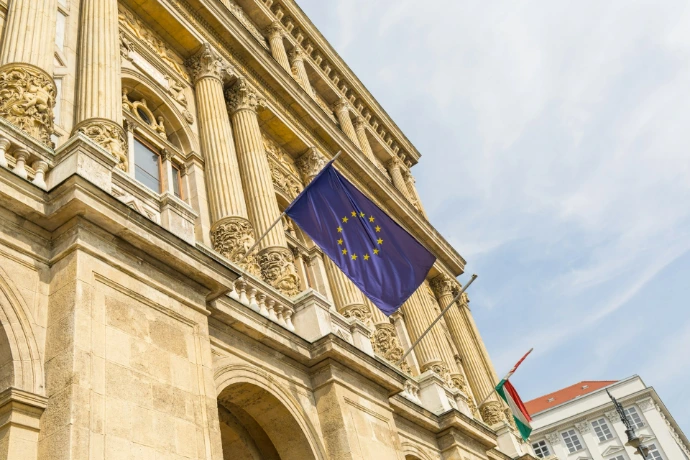
a European flag flying in front of a building

Testimonials

Would you like to receive more information?