Media Literacy and Disinformation: Strengthening Critical Thinking, Source Verification, and Awareness of Misinformation, aligned with EU efforts on democratic resilience


The event
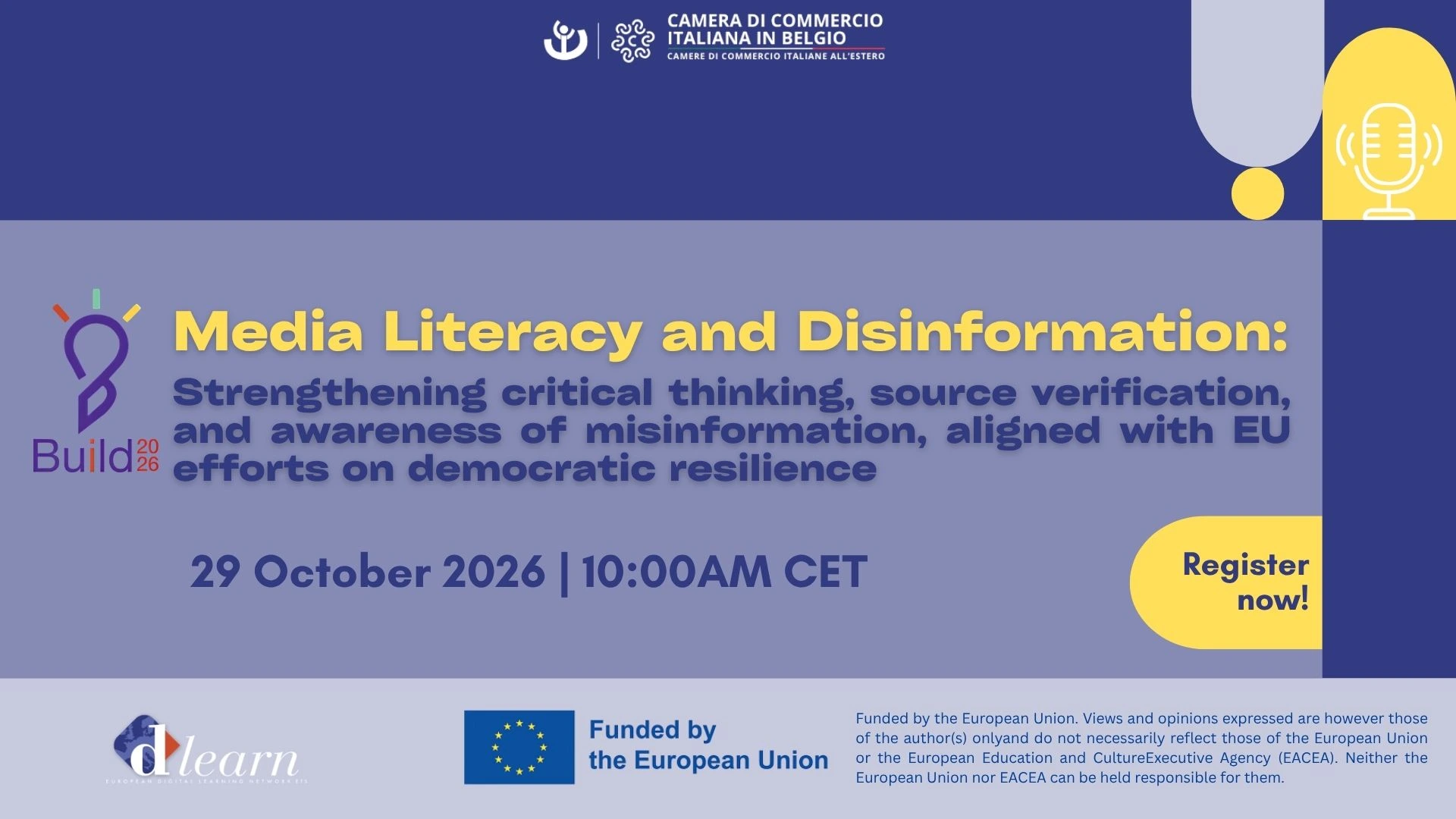
The Italian Chamber of Commerce in Belgium is organising the webinar “Media Literacy and Disinformation: Strengthening Critical Thinking, Source Verification, and Awareness of Misinformation.”
The growing spread of information online makes it increasingly important to know how to critically evaluate content, verify the reliability of sources, and recognise the risks associated with misinformation. In this context, media literacy is a fundamental tool for navigating the current digital information ecosystem and participating in an informed and responsible manner in digital and democratic life.
During the webinar, representatives from European institutions and the information world will explore the role of critical thinking, source verification, and media literacy in countering the spread of false or misleading information and contributing to the strengthening of democratic resilience.
Among the expected guests are representatives from the European Commission – DG CNECT and DG EAC and from ANSA.
The detailed programme of the interventions will be published soon.
The webinar will be held in English on the Zoom platform.
Participation is free, but the registration is mandatory. The access link will be sent exclusively to registered participants the day before the event.
The event will be recorded. The recording will be made available on the YouTube channel of the Italian Chamber of Commerce in Belgium.
For more information: https://dlearn.eu/build-2026/