Module 1 - The European Union: Foundation and Funding Opportunities
This module provides the essential foundations for understanding the functioning of the European Union and the European funding system, offering a concrete compass to navigate among institutions, programmes, calls for proposals, and professional opportunities.
Through a practical and market-oriented approach, participants will learn to read the European ecosystem not only as an institutional framework, but as a space for design, cooperation, and development. The module combines the analysis of the history, structure, budget, and funding opportunities of the EU with the study of funding logics, euro-projecting techniques, and project management tools, referencing thePM² Project Management Methodology developed by the European Commission.
The aim is to provide a solid foundation for understanding how funding opportunities arise, how to intercept the most relevant calls for proposals, and what elements make a project proposal credible, competitive, and consistent with European priorities.
The Belgian-Italian Chamber of Commerce combines training, direct experience on European projects and connection with the Brussels ecosystem. Participants not only acquire theoretical knowledge but also operational tools and a concrete professional perspective to take their first steps in the world of Euro-projecting, consultancy, and European affairs.
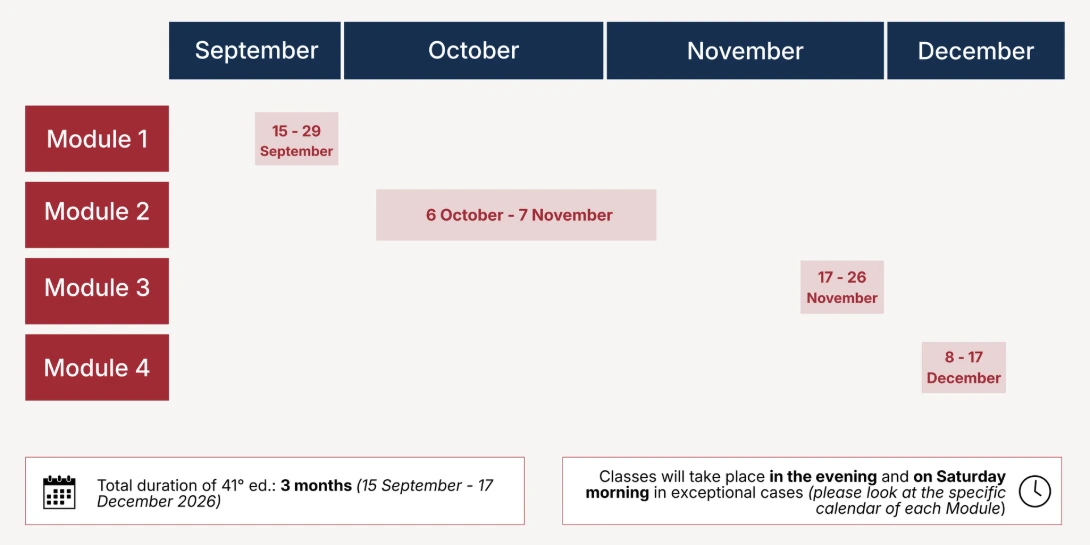
The five lessons take place online from 15 to 29 September:
- Tuesday 15, 22, 29 September, from 18:30 to 21:00
- Thursday 17, 24 September, from 18:30 to 21:00
Contents
- The institutional system of the European Union: historical evolution of European integration, role and competences of the main EU institutions, decision-making processes, and relations between the European Commission, the European Parliament, the Council, executive agencies and other actors within the European system.
- The EU budget: Multiannual Financial Framework and post-2027 scenarios: structure of the European budget, political and financial priorities, connection between EU strategies, funding programmes and future directions of European programming.
- EU funding opportunities: overview of the main European funding sources, including the distinction between directly managed programmes, structural funds, thematic instruments and opportunities linked to the digital, green, social and entrepreneurial transitions.
- Researching and monitoring EU calls: use of information platforms and official portals, preliminary analysis of calls for proposals, work programmes, guides for applicants and application documents, with attention to priorities, deadlines, eligibility criteria and administrative requirements.
- From project idea to proposal: definition of the problem, needs analysis, development of the intervention logic, and formulation of objectives, expected results, activities, impact and European added value.
- Quality projects and evaluation logic: analysis of case studies and good practices to understand what makes a proposal coherent, credible and suitable for evaluation; identification of the most common mistakes in project writing and in structuring an application.
- Building a European partnership: identification of partners, definition of roles and responsibilities, development of solid and reliable consortia, and management of relationships with public, private, academic and third-sector organisations.
- Basic elements of budgeting and financial reporting: introduction to project budget development, cost categories, consistency between activities and resources, eligibility principles for expenditure, administrative documentation and financial control logic.
- Project management for EU funds: introduction to planning, coordination, monitoring and risk management techniques, with reference to the European Commission’s PM² methodology and to tools useful for implementing funded projects.
- Reporting, communication and dissemination: drafting of quality reports, communication of results, dissemination to stakeholders and target groups, and enhancement of project impact through digital channels and integrated communication tools.
Practical focus
Understand the functioning of the EU’s institutional and financial system, connecting institutions, decision-making processes, policy priorities, the EU budget and the Multiannual Financial Framework.
Navigate EU programmes and funding opportunities, identifying key actors, strategic priorities and tools for monitoring calls.
Read and interpret a call for proposals, analysing objectives, eligibility requirements, evaluation criteria, required documentation, administrative constraints and deadlines.
Transform a project idea into a first application architecture, defining needs, target groups, objectives, activities, expected results, impact and European added value.
Understand the basics of building a European partnership, identifying partners, roles, responsibilities and criteria for structuring solid and reliable consortia.
Set up the essential elements of budget and financial reporting, connecting activities, resources, cost categories, eligibility principles for expenditure and administrative documentation.
Apply project management and communication tools, from activity planning to partner coordination, from monitoring to dissemination and enhancement of results.
Skills and career opportunities
- Understand the functioning of the European Union and the funding system, navigating institutions, decision-making processes, policy priorities, programmes and funding opportunities.
- Develop operational EU project design skills, from researching calls to reading documentation, from defining the project idea to building objectives, activities, results and impact.
- Acquire a solid foundation in European project management, with tools to plan, coordinate, monitor and report on funded projects, also with reference to the PM² methodology.
- Strengthen the ability to contribute to competitive applications, understanding evaluation criteria, the evaluator’s logic, partnership quality, budget coherence and European added value.
- Prepare for professional roles in EU project design, consultancy, public affairs and European project management within international offices, public bodies, NGOs, universities, companies and third-sector organisations.
Module 2 - Flagship EU-funded Programmes
This module guides participants in the analysis of key European funding programmes, helping them to transform knowledge of EU funds into operational capacity: choose the right programme, read acall, assess the coherence of a project idea and build a competitive application.
Through a comparative and practical approach, the module explores key programmes such as Erasmus+, Creative Europe, Horizon Europe, Single Market Programme, CERV and LIFE, highlighting objectives, priorities, beneficiaries, fundable actions, eligibility criteria, and evaluation logics. The module does not just explain “what each programme funds”, but guides participants to understand how to choose, read, and strategically use EU funds.
Compared to paths focused only on the theory of funding or on individual programmes, the CCBI format integrates three distinctive assets: direct experience in European project design, presence in the Brussels ecosystem, and a hands-on approach to real calls for proposals. Meetings with experts thus become a control room for learning how to navigate European programmes, identify the most suitable funding channel, and position a proposal with method, vision, and competitiveness.
The lessons take place online from 6 October to 7 November:
- Tuesday 6, 13, 20, 27 October and 3 November, from 18:30 to 21:00
- Thursday 8, 15, 22, 29 October and 5 November, from 18:30 to 21:00
- Saturday 10, 17, 24, 31 October and 7 November, from 09:30 to 12:30
Contents
Culture and Youth - Erasmus+ and Creative Europe Programmes (6, 8, 10 October)
Programme structure, thematic priorities and key actions, with a focus on mobility, transnational cooperation, educational, cultural and creative partnerships, and opportunities for training institutions, youth organisations, cultural enterprises and NGOs.
Erasmus+ in practice: analysis of calls, application forms and evaluation criteria; focus on partnerships, cooperation actions, target groups, expected results, dissemination and impact in the fields of education, training, youth and sport.
Creative Europe and European cultural project design: opportunities for the cultural and audiovisual sectors, cross-border cooperation, audience development, creative innovation, European networking and enhancement of the cultural dimension in projects.
Research and Innovation - Horizon Europe Programme (13, 15, 17 October)
Programme architecture and strategic priorities, with an introduction to Pillars, Clusters, Missions, European Partnerships, funding instruments (RIA, IA, CSA) and the role of international consortia.
Horizon Europe in practice: analysis of work programmes, topics, expected outcomes, scope, eligibility conditions and evaluation criteria; building the match between project idea, scientific and technological priorities, partnership and expected impact.
Topic and project concept lab: simulation of the analysis of a Horizon Europe call, preliminary definition of excellence, impact and implementation, identification of partners, work packages, deliverables and milestones.
Competitiveness and Entrepreneurship - Single Market Programme and ESF+ (20, 22, 24 October)
Programme structure and intervention priorities, with a focus on competitiveness, SMEs, entrepreneurial ecosystems, inclusion, employment, skills, training and social innovation.
Opportunities for companies, public bodies and territorial stakeholders: analysis of calls and instruments targeting chambers of commerce, business associations, SMEs, training institutions, social organisations and business support networks.
Practical examples and application cases: simulation of project interventions on competitiveness, capacity building, business support services, labour market inclusion, skills development and territorial impact.
Citizenship and Democratic Engagement - CERV Programme(27, 29, 31 October)
Programme priorities and areas of intervention, with a focus on European citizenship, equality, fundamental rights, democratic participation, European remembrance and the fight against discrimination.
Designing participation, rights and democracy projects: analysis of calls, eligibility criteria and evaluation logic, with attention to the transnational dimension, citizen engagement and the development of civic partnerships.
Analysis of funded projects and project simulation: case studies, participatory activities, advocacy, communication, inclusion of vulnerable target groups, social impact and dissemination of results.
Green Transition and Sustainability - LIFE Programme (3, 5, 7 November)
- Programme structure, sub-programmes and European priorities, with a focus on nature and biodiversity, circular economy, quality of life, climate mitigation and adaptation, and clean energy transition.
- Designing sustainability and green transition projects: analysis of calls, requirements, evaluation criteria and project types, with attention to environmental innovation, replicability, technical sustainability and contribution to European climate objectives.
- Good practices, case studies and project lab: analysis of funded projects and concept simulation, from the definition of the environmental problem to the development of activities, indicators, stakeholders, expected results and communication plan.
Practical focus
- Navigate the main European funding programmes, understanding differences, objectives, beneficiaries, eligible sectors, management modes and opportunities most suitable for different types of project ideas.
- Select the programme that is most consistent with a proposal, evaluating the match between needs, target groups, policy priorities, expected results, required partnership and level of project ambition.
- Read and interpret calls, work programmes and guides for applicants, identifying priorities, eligibility requirements, evaluation criteria, administrative constraints, mandatory documents and deadlines.
- Analyse success cases and funded projects, recognising recurring elements of quality, internal coherence, European added value, sustainability, impact and transferability of results.
- Build a first application strategy, defining objectives, activities, outputs, partnership, indicative budget, result indicators and project narrative according to the selected programme.
- Simulate the preparation and review of a proposal, through guided workshops on key sections of the application, with feedback focused on the evaluator’s logic and European Commission standards.
- Develop a cross-cutting understanding of EU funds, useful for working in consultancy, public bodies, NGOs, universities, companies, cultural organisations, training institutions and organisations active in social, environmental and entrepreneurial innovation.
Skills and career opportunities
- Acquire operational knowledge of the main EU funding programmes, understanding their objectives, priorities, beneficiaries, access criteria, management logic and sector-specific features.
- Develop programme matching skills, learning to connect project ideas, territorial or organisational needs and European funding opportunities.
- Strengthen the ability to analyse calls and official documentation, with attention to work programmes, call texts, application forms, eligibility criteria, budget, partnerships and impact indicators.
- Prepare to contribute to the writing and management of European applications, working on case studies, simulations and practical tools applicable in professional EU project design contexts.
- Access professional opportunities in consultancy and European project management within public bodies, NGOs, universities, companies, cultural organisations, training institutions and organisations active in EU programmes.
Module 3 - AI in Project Design and Management
The module explores the use of Artificial Intelligence in the writing and management processes of European projects, integrating AI tools, evaluative logic and project methodologies.
Participants will develop operational workflows for analysing calls for proposals, drafting concept notes, preparing applications and managing funded projects.
The four lessons take place online from 17 to 26 November:
- Tuesday 17 and 24 November, from 18:30 to 21:00
- Thursday 19 and 26 November, from 18:30 to 21:00
Contents
- AI in the design of European proposals: use of Artificial Intelligence throughout the entire application cycle, from identifying the project idea to structuring the proposal, with attention to consistency between objectives, activities, expected results, impact and programme requirements.
- Analysis of calls, requirements and evaluation criteria: application of AI tools to interpret calls for proposals, guides for applicants, application forms, work programmes and official documentation, identifying priorities, eligibility requirements, administrative constraints, scoring criteria, expected results and critical points of the application.
- Prompt engineering for EU project design: design of effective prompts for the different phases of project work, from preliminary analysis of the call to the development of the concept note, from drafting narrative sections to reviewing the proposal according to the evaluator’s logic.
- Writing and optimisation of project sections: guided use of AI to improve the quality of key sections of the proposal, such as objectives, methodology, impact, work plan, work packages, deliverables, milestones, risk management, sustainability and European added value.
- Simulation of evaluation and quality check of the application: use of AI to verify the soundness of the proposal against evaluation criteria, identify inconsistencies, argumentative gaps and weaknesses before submission.
- Review of non-funded proposals: AI-assisted analysis of feedback, Evaluation Summary Reports and evaluations received, to turn critical points into an improvement and resubmission strategy.
- Specialised AI agents and assistants: introduction to the configuration of dedicated assistants for call analysis, application form compliance checks, linguistic and structural review, evaluation logic verification and management support.
- AI in the management and implementation of funded projects: support for activity monitoring, partner coordination, preparation of technical reports, meeting summaries, management of deliverables, milestones, risks, communication and internal control processes.
Practical focus
- Guided analysis of EU calls with AI tools, including the identification of priorities, specific objectives, eligibility requirements, administrative constraints, evaluation criteria and programme expectations.
- Development of an AI-assisted concept note, starting from a project idea and defining objectives, target groups, needs, expected results, main activities, innovation elements and European added value.
- Practical application of prompt engineering to applications, with exercises on analytical, drafting, evaluation and review prompts, calibrated to the different sections of the proposal.
- Review, optimisation and evaluation simulation of the proposal, using AI to improve clarity, internal coherence, measurability of objectives, robustness of impact, quality of the work plan and alignment with scoring criteria, testing the application from the evaluator’s perspective before submission.
- Analysis of a non-funded proposal, through the review of feedback or evaluation reports and the development of a strategy for revision, strengthening and possible resubmission.
- Configuration of AI assistants to support EU project design, for call analysis, project coherence checks, linguistic review, compliance verification or reporting support.
- Simulation of management, monitoring and reporting activities, using AI to organise information, summarise progress, prepare reports, check deliverables and support operational coordination.
Skills and career opportunities
- Use artificial intelligence tools to support EU project design, from reading calls to generating concept notes, project drafts, coherence analyses and structured reviews.
- Apply prompt engineering techniques to European project design, developing effective prompts for analysis, writing, review, evaluation simulation, reporting and application optimisation.
- Improve the quality, coherence and competitiveness of project proposals, using AI to verify alignment with evaluation criteria, clarity of objectives, robustness of impact and completeness of the work plan.
- Integrate AI into project management and reporting processes, supporting monitoring, information organisation, deliverable checks, progress summaries and communication of results.
- Prepare for advanced professional profiles in EU project design and EU funds management, combining project design skills, strategic thinking and responsible use of AI in public, private and third-sector organisations.
Module 4 - JobLink
The module offers an opportunity for direct contact with the institutional, professional and entrepreneurial ecosystem active in the European context in Brussels. Through online workshops, in-person activities, professional meetings and operational simulations, participants will be able to apply the skills acquired during the IMES course and gain a closer understanding of the dynamics of work, networking and collaboration in the field of European affairs.
The JobLink Module is designed for both undergraduates, recent graduates and young professionals who wish to orient themselves in the European job market, as well as for professionals with experience who wish to enhance their profile with skills in European project design and expand their network of international contacts.
The four lessons take place online and in Brussels from 8 to 17 December:
- online: Tuesday 8 and Thursday 10 December, from 18:30 to 21:00
- in Brussels: from 14 to 17 December (schedules will be defined according to the availability of the European institutions and business stakeholders involved)
Contents
ONLINE
- Professional profile, CV and European applications: analysis and application of techniques and tools to build CVs, cover letter, application and targeted professional presentations, to enhance skills, experiences and professional objectives in European and international contexts.
An adaptable approach for junior profiles and professionals already active, eager to integrate skills in European project design, European affairs, consultancy and partnership development. - Professional positioning in the European market: analysis of the main professional contexts related to European affairs, from European project design to consultancy, including businesses and entrepreneurial associations, international organisations and NGOs on EU programmes and tenders.
- Particular attention to building a profile consistent with one's level of experience, objectives and the opportunities offered by the Brussels ecosystem.
IN BRUSSELS
- Guided Tender Simulation: workshop development of a Project Work starting from a real call for proposals, from the analysis of requirements to the construction of the partnership, from structuring the proposal to the final presentation, with structured feedback from experts and consultants in European project design.
The activity will allow for the integrated application of the skills developed in the previous modules. - Career Day and professional meetings: meetings with entrepreneurial realities, organisations, consultants, network representatives, and stakeholders active in Brussels, to explore professional opportunities, dynamics of international collaboration, and ways to build networks and partnerships in the European context.
- Networking and the development of professional relationships:introduction to the logics of networking in the European context, focusing on building qualified contacts, presenting one's profile, identifying potential interlocutors, and understanding the dynamics with which businesses, entities, and organisations collaborate within projects, consortia, and European initiatives.
- Institutional visits: direct knowledge of European institutions through meetings and testimonies about their operational and decision-making functioning, with attention to the role of institutional and non-institutional actors who contribute to the definition and implementation of European policies.
Practical focus
Simulations of selection processes, interviews, and presentation of one's profile in European and international contexts.
Guided writing and revision of CVs, cover letters, applications and professional presentation tools, with adaptation to different levels of experience and career objectives.
Definition of a professional positioning strategy, useful both for entering the EU job market and for the development of profiles already active in other sectors.
Guided analysis of a call or a European tender, and development of a project proposal through a Project Work laboratory.
Building a preliminary partnership strategy, identifying roles, skills, complementarities, and added value of potential partners.
Networking activities and discussions with businesses, organisations, consultants, and stakeholders active in the European ecosystem in Brussels.
Operational pitch and discussion with experts, based on the project scenarios developed during the simulation, to discuss needs, partnerships, and collaboration opportunities in the European context.
Skills and career opportunities
- Enhancing one’s professional profile in European and international contexts, effectively communicating academic skills, professional experience, objectives and added value.
- Preparing for application, selection and networking processes related to opportunities in European institutions, international organisations, consultancy, NGOs, business associations, companies and third-sector organisations.
- Developing a competitive profile for roles in EU project design, EU affairs, European project management, consultancy, partnership development and management of funded projects.
- Understanding the professional dynamics of the Brussels ecosystem, including the ways in which businesses, entities, networks and organisations build collaborations, partnerships and European initiatives.
- Applying skills in European project design through an operational simulation based on a real call, working on call analysis, project strategy, partner identification and engagement with stakeholders.